











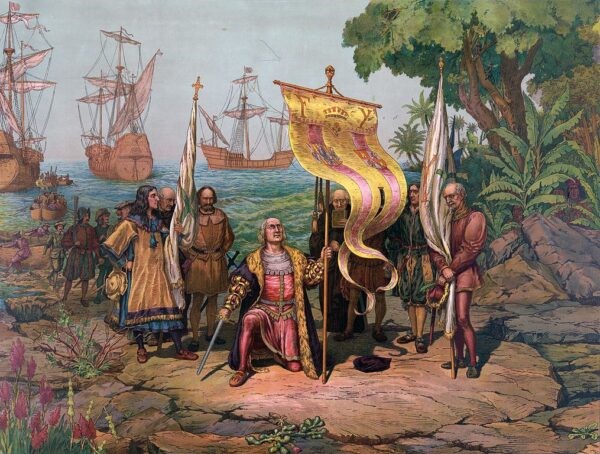
Re-discovering America
The phrase “there’s no need to re-discover America” is often used to convey that there is no need to search for a new path, as an already known route exists. It implies that there is no need to seek innovation when something tried and tested already exists. While we may not know exactly how this phrase became part of our culture, we do know that the re-discovery of America was far from a waste of time.
The Italian navigator Amerigo Vespucci, between 1502 and 1504, published his travels and proposed the idea that the lands discovered by Christopher Columbus in 1492 were not islands near India in East Asia, but rather entirely new lands—territories that were unknown to ancient geographers and Europeans of that era. Interestingly, no one paid attention to or believed Vespucci’s claims, because, like the belief that the world was flat, it was a widely accepted fact at the time that those lands were part of India. It was common knowledge.
Finally, in 1507, a German cartographer named Martin Waldseemüller became convinced by this new theory. He researched it, created a new map, and named the newly discovered continent “America,” believing Vespucci to be the first person to have discovered these lands.
We are all familiar with this part of the story, but what we fail to grasp is that America was not “re-discovered” in the second instance. Columbus and others did not know these places were a “new continent,” and for 15 years, the idea of “new lands” was not accepted by anyone. Even when Columbus died in 1506, he still believed he had reached India. In truth, it was Amerigo Vespucci who discovered what was truly new, and Martin Waldseemüller was the one who validated this discovery.
America’s re-discovery, 15 years after Columbus, marked a turning point in human history—the discovery of “questioning” and being open to new ideas. This event taught people that contemporary observations were more accurate than past traditions, paving the way for innovation. These new lands, which were not mentioned in any books and were unknown to anyone, were questioned based on the observations of someone we could describe as innovative, and finally, their recognition as a new continent was confirmed by others. This was something completely new to people of that time.
In its broadest definition, innovation refers to the conversion of knowledge into economic and social benefit. The acceptance of America as a new continent created an unprecedented environment for innovation. This discovery led people to question what they previously knew and motivated them to seek new information more quickly. This thirst for innovation later brought countless benefits to Europeans, helping them gain a competitive edge.
Despite hearing about these new discoveries, countries like Iran, India, China, and even the Ottoman Empire did not engage with them, despite having the necessary technological, economic, and military tools. They still believed the world revolved around Asia. While Europeans competed over the Atlantic and Pacific trade routes, even small countries like Denmark were organizing expeditions to the Americas, yet no expedition was made from the Islamic world, India, or China to the Americas.
We must first be open to new ideas and aim to obtain new knowledge.
As Europeans transformed new inventions and discoveries into wealth and power, they began investing in this area. As early as the 1660s, the English established a specialized community in science and founded an institution that could be described today as a national research and development body, or a “Ministry of Technology and Science,” which was the “Royal Society.” They invested in science and technology, producing figures like Newton and Faraday.
As a result, over the past 300 years, Europeans established unquestionable dominance in the Americas, Oceania, the Atlantic, and the Pacific. With the resources they acquired and the competitive power and technological advancements that came from their innovative thinking, they not only colonized Asia but also divided other empires among themselves.
As demonstrated today, the secret to their success lies in taking steps in innovation, which is a prerequisite for individual creativity. What are these steps?
- Accept your ignorance and lack of knowledge.
- Free yourself from ingrained ideas.
- Constantly question.
- Observe.
- Go on explorations.
- Gain new experiences.
- Expand your horizons and thoughts with new perspectives.
- Apply innovations in a way that brings benefits.
Was America already there, and did we not go? Unfortunately, it was there, but we didn’t see the need to go. Over the years, we lived in a dogmatic, uncritical, uninvestigative, rote-learning, and complacent culture. Be careful! Today, let’s not raise our children in a way that turns them into individuals who do not question, under the guise of “there’s no need to search for innovations” or “no need to think for ourselves.”
“Are you bringing new customs to the old village?” “Stop inventing new things for us.” “Things have always been this way, and they will continue this way.” “We don’t know, our elders know (or I don’t know, my boss knows).” “These are inventions of the devil.”
Can creative individuals emerge from a society or institution that cannot think freely, cannot question, blindly accepts what they know, and assigns responsibility to authorities, while being closed to innovations? Can such a society or institution advance, be competitive, or rise above the level of contemporary civilization?
Every new piece of knowledge, if used correctly, makes us stronger and more competitive. However, even if we possess certain knowledge, it becomes useless if we are not open to new ideas and cannot combine that knowledge with our goals. Phrases like “our method is the best, there’s no need for anything else,” “these ideas don’t work in our industry,” and “let’s not re-discover America, it’s already been done” are the greatest barriers to innovation. The mindset of those who defend this limited way of thinking is exactly the same as those who, despite being aware, saw no need to organize expeditions to the new continent, America.
Those who are not open to innovation and change lose from the start.
Having a different perspective, not trusting superstitions and authorities, and being open to new ideas (in other words, being intellectually free) fosters an environment for innovation. To innovate, we must first admit our ignorance, question what is widely known and told to us, value every new idea, and open the way for innovations. Innovation thrives in environments where there is no authority or rigid rules, where ideas can be freely discussed, criticisms are welcomed, and all forms of communication are possible. This is what we call an innovation climate. To achieve sustainable success, development, growth, prosperity, and civilization, we must first create this climate.
The most important tool to create this environment is sharing knowledge and information. In today’s world, where constant change occurs, the chances of success depend on acquiring current knowledge and using it in line with organizational objectives. Information technology acts as a catalyst for innovation. Most innovations are simply new methods, forms, or interpretations of existing knowledge (such as the realization that the Americas were a new continent rather than part of India). To ensure that this knowledge transformation process works well, those involved must be able to access information quickly, easily, and affordably.
The concept of information encompasses everything related to information technology, such as the alphabet, the printing press invented in 1450, printed media and newspapers, books, the telegraph from the 1830s, the postal system, the telephone invented in 1876, the television in 1923, the internet, today’s information technologies, mobile phones, Big Data, and everything else that comes to mind.
The culture of innovation, technological development, and the investments that support it in research and experimental development (R&D), along with scientists, researchers, the number and quality of publications, patents, and so on, positively influences the economy, growth, and development. If the freedom to access innovations and developments is restricted, how can creative thoughts survive and lead to innovation and development?
Once we embark on the journey of discovering new and creative ideas and converting them into economic benefits, our interest in innovation will grow. As long as we don’t let dogmatic thoughts, sayings, and prohibitive practices suppress or limit this interest.
What do you think? Do you believe there’s no need to re-discover America?
“Success on the path of civilization is dependent on innovation. In social, economic, scientific, and technological life, this is the only path to progress and advancement”.-M. Kemal Atatürk
“For everything in the world—civilization, spirituality, life, and success—the truest guide is science and technology. Seeking guidance outside of science and technology is ignorance, straying from the right path.”-M. Kemal Atatürk
“The force that governs human life and activity is creativity and the ability to invent. It has been shown that those who are capable of invention and creativity must also be cultured.”-M. Kemal Atatürk
“All progress is the work of human thought. Igniting thought should be our primary task. Once a nation masters its own identity and is able to think, that’s enough! Even if they think incorrectly at first, in a short time, they can correct that mistake. Once thought is set into motion, everything gradually falls into place and improves. The free movement of thought is only possible if the individual is free to speak their mind, write, and take any initiative based on their decisions”.-M. Kemal Atatürk
“Individual is free to speak, write, and take any action according to their decision. “— Mustafa Kemal Atatürk