






SAP Activate as a methodology is flexible and adaptable, and it incorporates both predictive (waterfall) and adaptive (agile) approaches, depending on the project requirements.
SAP Activate Overview
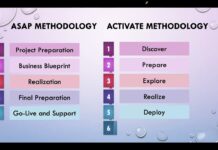
SAP Activate is SAP’s implementation methodology designed to accelerate the deployment of SAP solutions (like SAP S/4HANA). It is a hybrid methodology that incorporates elements of both predictive and agile approaches. The main phases of SAP Activate are:
- Prepare – Project setup, scope, and initial planning.
- Explore – Fit-to-Standard workshops, configuration, and prototyping.
- Realize – Configuration and development of the solution.
- Deploy – Data migration, testing, and go-live preparations.
- Run – Post-go-live support and optimization.
The Launch of SAP Activate
The need for a new methodology became evident as businesses shifted towards more agile, cloud-based solutions, which required faster deployment and flexibility compared to traditional on-premise implementations. Recognizing the limitations of these older methodologies, especially with the shift towards cloud solutions and Agile practices, SAP officially introduced SAP Activate in 2015, aligning its release with the launch of SAP S/4HANA. SAP Activate combined the best elements of previous methodologies (like ASAP and SAP Launch) but introduced a more streamlined, Agile-based approach that catered to both on-premise and cloud deployments.
SAP Activate provides structured phases (Discover, Prepare, Explore, Realize, Deploy, and Run) which resemble a predictive approach. In traditional implementations, especially on-premise solutions, SAP Activate uses predefined deliverables and milestones. For example, it provides detailed planning during the Discover and Prepare phases or Sequential execution of configuration and testing in the Realize phase.
But, on the other hand, SAP Activate integrates agile principles in its approach, especially for SAP Cloud implementations like SAP S/4HANA Cloud. It allows iterative prototyping, feedback loops, and sprints (especially in the Explore and Realize phases). It encourages the use of Fit-to-Standard workshops, which are iterative and adaptive.Agile tools and practices, such as user stories and backlogs, are emphasized for rapid solution deployment and flexibility.
SAP Activate and Scrum share similarities but are distinct frameworks. However, SAP Activate can be adapted to Scrum principles, particularly in the context of agile project management. Below is an explanation of how SAP Activate aligns with Scrum and how you can implement Scrum within the SAP Activate methodology.
Scrum Overview
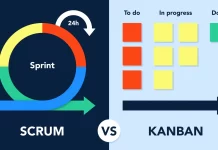
Scrum is an agile framework used for software development and project management. It focuses on iterative and incremental development, with work divided into Sprints (typically 2–4 weeks). The key components of Scrum include:
- Product Owner – Defines the product backlog and prioritizes requirements.
- Scrum Master – Facilitates Scrum processes, removes obstacles.
- Development Team – Responsible for executing the tasks in the sprint.
- Sprints – Time-boxed iterations of work that deliver increments of the product.
Origins of the Term “Scrum”:
- The term “Scrum” in project management was inspired by rugby. In rugby, a “scrum” (short for scrummage) is a formation used to restart play after a minor infraction. It involves players from both teams interlocking and pushing against each other to gain control of the ball.
- The term was first applied to project management by Hirotaka Takeuchi and Ikujiro Nonaka in their 1986 Harvard Business Review article titled “The New Product Development Game”. They used the metaphor of a rugby scrum to describe high-performing, cross-functional teams working closely together toward a common goal.
How Scrum Project Management Resembles Rugby:
- Teamwork and Collaboration: Just as rugby players work together as a unit to move the ball down the field, Scrum teams collaborate closely to move a project forward. In both, everyone has a role, but success requires collective effort.
- Iterative Progress: In rugby, teams progress in a series of short, intense efforts to move the ball forward. Similarly, Scrum is built around sprints, which are short, focused work cycles aimed at delivering small, incremental progress.
- Adaptability: Rugby players continuously adapt their strategy during the game based on the changing situation on the field. Likewise, Scrum teams regularly adjust their plans through daily stand-ups and sprint reviews to respond to new challenges and feedback.
The idea behind using “Scrum” as a project management framework is to emphasize the importance of collaboration, flexibility, and continuous improvement—similar to how a rugby team adapts during the game to achieve their goals.
SAP Activate and Scrum Integration
While SAP Activate itself isn’t Scrum-based, Scrum principles can be applied within SAP Activate’s framework, particularly for agile implementation of SAP solutions (especially in SAP S/4HANA Cloud). Here’s how Scrum can align with the Explore and Realize phases in SAP Activate:
1. Aligning Scrum with the Explore Phase
- In the Explore phase, the project team typically conducts Fit-to-Standard workshops, where SAP’s standard capabilities are matched with the customer’s requirements. This phase often requires iterative work, making it well-suited for a Scrum approach.
- Scrum Artifacts:
- Product Backlog: The Product Owner (or the Project Manager in SAP projects) creates a backlog of user stories or features that need to be implemented.
- Sprint Backlog: During each sprint, the team focuses on a subset of the product backlog, aligning with specific goals for that sprint.
- Scrum Events:
- Sprint Planning: Teams plan the upcoming sprint, defining user stories that will be worked on during the sprint.
- Daily Standups: Short daily meetings help to discuss progress, obstacles, and next steps.
- Sprint Reviews: At the end of each sprint, the team demonstrates the work completed, providing stakeholders with incremental progress.
- Sprint Retrospectives: After each sprint, the team reflects on what went well and areas of improvement.
2. Aligning Scrum with the Realize Phase
In the Realize phase, configuration and development take place. This phase often involves custom development, integrations, and configuration adjustments that can benefit from Scrum’s iterative approach.
- Iterative Development: The Realize phase can be broken down into multiple sprints, each focused on specific features, configurations, or development tasks.
- Scrum Events and Roles:
- The team can use Sprint Reviews to demonstrate completed configurations or customizations.
- Regular Backlog Refinements and Daily Scrum meetings can help keep work focused and on track.
- Collaboration between the Scrum Master, Product Owner, and Development Team will ensure priorities are addressed and risks are managed.
3. Benefits of Applying Scrum to SAP Activate
- Faster Time to Value: With Scrum, project teams can deliver functional increments of the SAP solution at the end of each sprint, providing stakeholders with tangible results faster.
- Better Flexibility and Responsiveness: Scrum’s iterative nature allows for better adaptation to changing requirements, which is especially valuable in digital transformations where requirements can evolve during the project.
- Continuous Feedback and Improvement: Scrum enables regular feedback loops from business stakeholders, ensuring the solution aligns with their needs and adjusting accordingly.
4. Key Challenges of Implementing Scrum in SAP Activate
- Cultural Shift: Adopting Scrum may require a change in mindset for teams used to more traditional project management approaches. Stakeholder and team alignment on agile practices is crucial.
- Complexity in Larger Projects: Scrum’s framework might need to be adapted for larger, more complex SAP projects that require integration with other systems, legacy systems, or specialized SAP modules.
- Balancing Agile and Governance: SAP projects, especially on-premise ones, require a balance between the flexibility of Scrum and the governance requirements of an enterprise solution deployment. This includes careful planning for documentation, risk management, and compliance.
Activate vs Scrum
1. Purpose and Focus
- SAP Activate:
- SAP Activate is a methodology specifically designed for implementing SAP solutions (such as SAP S/4HANA). It focuses on delivering SAP projects efficiently by providing a structured approach, integrating best practices, and utilizing pre-configured content for rapid deployment.
- The focus is primarily on SAP system implementation, ensuring that teams can configure, customize, and deploy SAP software while adhering to best practices.
- Scrum:
- Scrum is an Agile framework that can be used for a wide variety of projects, especially in software development. It focuses on managing work through iterative and incremental development cycles (sprints) and emphasizes collaboration, flexibility, and continuous improvement.
- Scrum is agnostic to the domain and can be applied to any project type, not just software implementation or IT-related projects.
2. Methodology Structure
- SAP Activate:
- SAP Activate includes three key pillars:
- SAP Best Practices: Pre-configured content that can be customized for specific business needs.
- Agile Project Delivery: An iterative and Agile-based project delivery methodology that integrates Agile with specific SAP solution practices.
- Tools and Guided Configuration: SAP tools to support project management, like SAP Solution Manager, SAP Cloud Platform, and more.
- SAP Activate is structured into phases:
- Prepare (Project Preparation)
- Explore (Requirements gathering and fit-to-standard workshops)
- Realize (Configuration, testing, development)
- Deploy (Go live and transition)
- Run (Post-go-live support and operations)
- SAP Activate includes three key pillars:
- Scrum:
- Scrum is a more general Agile methodology with specific roles, events, and artifacts.
- Roles: Product Owner, Scrum Master, and Development Team.
- Events: Sprint Planning, Daily Scrum (Stand-up), Sprint Review, and Sprint Retrospective.
- Artifacts: Product Backlog, Sprint Backlog, and Increment.
- Scrum operates in sprints (usually 1-4 weeks) and has a focus on delivering small, incremental improvements at the end of each sprint.
- Scrum is a more general Agile methodology with specific roles, events, and artifacts.
3. Phases and Cycles
- SAP Activate:
- SAP Activate is typically organized into project phases (Prepare, Explore, Realize, Deploy, and Run) and focuses on pre-configured workflows, tools, and templates for each phase to ensure smooth SAP implementation.
- The methodology is designed to align with SAP-specific deliverables, and while it does incorporate Agile principles, it has a structured, predefined approach due to the complexity of SAP systems.
- Scrum:
- Scrum operates in short iterations (sprints), typically lasting 1-4 weeks. It uses incremental development and focuses on delivering small, functional units of work during each sprint.
- Scrum allows teams to self-organize and make decisions about how to deliver work in short cycles, based on feedback and inspection.
4. Flexibility and Customization
- SAP Activate:
- While SAP Activate adopts an Agile approach, it still provides a structured, predefined pathway for implementing SAP solutions. The process is somewhat less flexible in terms of customization because it heavily relies on SAP Best Practices and tools for configuration.
- It’s designed to provide a structured environment for managing the deployment of complex SAP solutions, so there’s less room for deviation from the standard methods unless modifications are required for specific business needs.
- Scrum:
- Scrum is highly flexible and adaptable. Teams can choose their own tools, processes, and practices that align with their needs. Scrum allows teams to adapt quickly based on changing requirements, customer feedback, or shifting priorities, making it much more dynamic compared to SAP Activate.
5. Roles
- SAP Activate:
- In SAP Activate, the roles are typically more focused on the project and system-specific tasks. Key roles include:
- Project Manager: Manages the project timeline and resources.
- Solution Architect: Focuses on system design and configurations.
- SAP Consultants: Specialists in various SAP modules who configure and customize the system.
- Business Process Owners: Responsible for providing business requirements and ensuring the solution meets organizational needs.
- In SAP Activate, the roles are typically more focused on the project and system-specific tasks. Key roles include:
- Scrum:
- In Scrum, there are three main roles:
- Product Owner: Represents stakeholders and prioritizes the product backlog.
- Scrum Master: Facilitates the Scrum process and removes obstacles.
- Development Team: The team responsible for building and delivering the work during each sprint.
- Scrum roles are designed to be self-organizing and focus on delivering value incrementally with the team taking ownership of decisions.
- In Scrum, there are three main roles:
6. Collaboration and Stakeholder Engagement
- SAP Activate:
- SAP Activate promotes collaboration but often in the form of workshops and sessions focused on gathering requirements, refining the solution, and validating configurations. Stakeholder involvement is key in the Explore and Realize phases.
- The methodology encourages close communication with business stakeholders during the configuration and testing stages.
- Scrum:
- Scrum fosters constant collaboration between the team and stakeholders through regular ceremonies, such as the Daily Standup, Sprint Review, and Sprint Retrospective. The Product Owner ensures regular stakeholder feedback and involvement in backlog refinement.
7. Project Management Tools
- SAP Activate:
- SAP Activate relies heavily on SAP tools, such as SAP Solution Manager, SAP Cloud Platform, and SAP Fiori. These tools help manage project phases, configurations, and implementation tasks, and they provide guidance and templates for teams.
- Scrum:
- Scrum uses a variety of tools depending on the team’s preference. Common tools include Jira, Trello, Monday.com, and Azure DevOps to manage backlogs, track sprints, and facilitate collaboration.
Comparison Summary
| Aspect | SAP Activate | Scrum |
| Purpose | Implementing SAP solutions | Managing any project iteratively and incrementally |
| Structure | Structured methodology with predefined phases (Prepare, Explore, Realize, Deploy, Run) | Flexible, iterative cycles (sprints) |
| Flexibility | Less flexible, mostly focused on SAP configurations and best practices | Highly flexible and adaptive, based on team needs |
| Roles | Project Manager, Solution Architect, SAP Consultants, Business Process Owners | Product Owner, Scrum Master, Development Team |
| Collaboration | Collaboration during workshops, configuration, and validation phases | Ongoing collaboration with daily standups and regular reviews |
| Phases/Cycles | Defined project phases with specific deliverables | Iterative sprints with regular feedback and adjustments |
| Tools | SAP tools (e.g., SAP Solution Manager, SAP Cloud Platform) | Flexible tools (e.g., Jira, Trello, Monday.com) |
| Customization | Relatively predefined process with SAP Best Practices | Highly customizable to fit any team or project |
Conclusion: SAP Activate as Adaptive Scrum
While SAP Activate isn’t inherently Scrum-based, the methodology supports agile principles, and teams can apply Scrum effectively within certain phases, especially for SAP Cloud implementations. The Explore and Realize phases are ideal for agile work, where iterative and incremental delivery can be employed using Scrum’s framework. Adapting Scrum within SAP Activate allows project teams to remain flexible, deliver value incrementally, and foster better collaboration with stakeholders.