








BATNA: Best Alternative to a Negotiated Agreement
I’ve learned that BATNA stands for “best alternative to a negotiated agreement”.
Negotiation is one of the most common forms of interaction in both our professional and everyday lives. Whether we realize it or not, we engage in numerous negotiations on various matters—be it making a choice with friends or family, renting or buying a house, or negotiating a commercial contract for our job. Many examples can be given.
The term “müzakere” (negotiation) is somewhat archaic. In Turkish, it is often used interchangeably with the terms “pazarlık” (bargaining) and “tartışma” (discussion), but I believe these words don’t fully capture its meaning. Negotiation can be defined as a decision-making process where parties voluntarily communicate with each other to have their thoughts and demands accepted by the other side. For a negotiation to occur, there must be at least two parties with conflicting interests and a situation that requires a decision. There needs to be a mutual need to align and understand different interests and viewpoints on a common ground. Therefore, rather than merely reaching an agreement, it is more about making a joint decision.
So, What Is BATNA ?
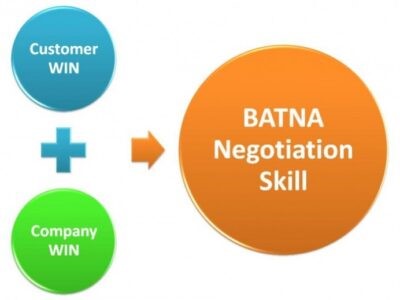
BATNA is essentially the plan of action to be taken if no agreement is reached. It serves as a “threshold,” “precondition,” or an “alternative solution” if negotiations fail. Having multiple alternatives strengthens your position in negotiations, making the process easier. If you lack an alternative, it’s clear that your bargaining power at the negotiation table will weaken. If the other party realizes that you have no other options, they will likely exploit this situation to turn it in their favor. Therefore, it’s recommended that anyone preparing for a negotiation should develop at least one alternative before sitting down at the table. In this way, you should have minimum acceptable criteria—a BATNA—to avoid falling into a disadvantageous position.
For example, if you’re negotiating your salary, your BATNA might be finding another job, extending your job search, or simply staying in your current position. The price of not having an alternative is paid at the negotiation table. An unfair employer, believing you can’t easily find another job, can easily reject your demands. However, if you have an offer from a better-paying job, you’ll be in a stronger position during salary negotiations. Similarly, an employer’s BATNA might be the cost of hiring another candidate of similar quality to replace you.
How much bargaining power do you have in negotiating service terms and prices with a supplier if you have no alternative?
BATNA: Your Plan B When Plan A Fails
BATNA is about having a Plan B when your Plan A doesn’t pan out. Having a Plan B provides a path that might eventually lead you back to Plan A. Negotiation is a process aimed at achieving something better than your BATNA, in other words, reaching your Plan A. If you have a BATNA, you gain the power to directly say “no” to an offer that goes against your interests.
To effectively use the BATNA approach in a negotiation, you should create an action list, generate alternatives, and select the best possible option. The key message of BATNA is that “this last option can be significantly improved through negotiation.”
Don’t be left without alternatives on your way to achieving Plan A! Create alternatives.
“Make sure you have a BATNA.”