






SAP Activate and SAP ASAP are both methodologies used for implementing SAP solutions, but they differ in terms of structure, flexibility, and approach.
SAP Activate is SAP’s end-to-end implementation methodology designed to help businesses quickly and efficiently adopt SAP solutions such as SAP S/4HANA, SAP Cloud, and other SAP products. It integrates a combination of proven implementation practices, guided configurations, tools, and accelerators. It is designed to offer flexibility, agility, and efficiency during the entire project lifecycle, from project initiation to post-go-live optimization.

Key Features of SAP Activate
SAP Activate is SAP’s modern implementation methodology designed to accelerate the adoption of SAP solutions, especially for cloud-based implementations like SAP S/4HANA. It combines proven practices, agile principles, and a flexible, streamlined approach to enable businesses to implement SAP solutions efficiently and with reduced risk. Here are the key features of SAP Activate:
1. Agile and Flexible Approach
- Agile Methodology: SAP Activate embraces agile practices, allowing for iterative and incremental delivery of solutions. The implementation is broken down into manageable workstreams (sprints), and feedback from each sprint is incorporated into future stages.
- Flexibility: The methodology allows for adjustments as the project progresses. This adaptability is critical for organizations that need to respond to changing business needs or new requirements during the project.
2. End-to-End Solution
- Full Project Lifecycle Coverage: SAP Activate supports the entire implementation process, from project initiation and preparation through to post-go-live optimization and support. It includes everything from project management and planning to training and continuous improvement.
- Cloud-Ready: Specifically designed for cloud solutions like SAP S/4HANA Cloud, SAP Activate enables seamless cloud integration, supporting both cloud-only and hybrid cloud environments.
3. Guided Configuration
- Pre-configured Templates: SAP Activate provides Guided Configuration, which includes predefined, industry-specific configurations and business processes. This speeds up the initial setup and reduces the need for custom development.
- Best Practices: It includes SAP Best Practices, which are pre-built configurations that follow industry standards. These are designed to meet common business requirements, reducing the effort required for customization.
4. SAP Fiori and User Experience Focus
- Fiori-Driven: SAP Activate emphasizes the use of SAP Fiori for a modern, consistent, and intuitive user experience. This approach ensures that users have easy access to the tools and information they need, improving productivity and adoption.
- User-Centric: The methodology prioritizes the user experience in the design and configuration of SAP solutions to ensure that end-users have an optimized and seamless experience with the system.
5. Tools and Accelerators
- SAP Tools Integration: SAP Activate makes extensive use of SAP tools, such as SAP Solution Manager, SAP Cloud Platform, and SAP Fiori to manage project phases, track progress, and facilitate collaboration.
- Accelerators: SAP provides tools and accelerators such as Fit-to-Standard Workshops, SAP Activate Roadmaps, and SAP Model Company to further expedite the implementation process.
6. Clear Phases with Deliverables
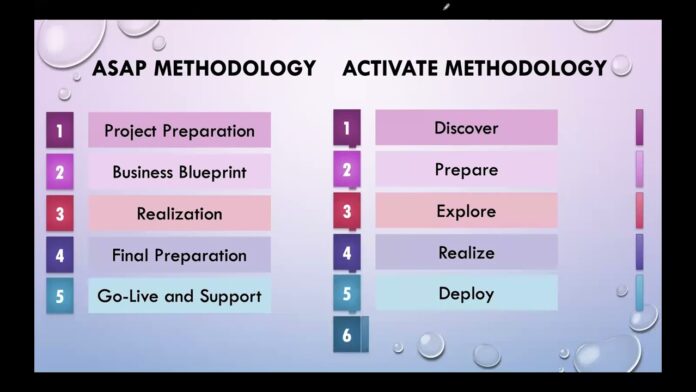
- Pre-Defined Phases: SAP Activate follows a structured phase approach similar to traditional methodologies, but with an agile twist. The key phases are: Prepare, Explore, Realize, Deploy, and Run. Each phase includes specific deliverables that guide the project team.
- Prepare: Project kick-off and planning.
- Explore: Detailed exploration of requirements and system configuration.
- Realize: System configuration and customization.
- Deploy: Go-live and final testing.
- Run: Post-go-live support and continuous optimization.
7. Continuous Collaboration and Feedback
- Frequent Stakeholder Involvement: Collaboration with key stakeholders is encouraged throughout the implementation process. Regular reviews, sprint meetings, and testing sessions ensure that the project remains aligned with business goals.
- Customer Engagement: SAP Activate focuses on engaging business users early on in the project, ensuring that they provide feedback and validation during the system design and configuration.
8. Optimized for SAP S/4HANA
- Built for S/4HANA: SAP Activate is specifically designed to facilitate the implementation of SAP S/4HANA, SAP’s next-generation ERP suite. It provides frameworks for both on-premise and cloud versions of SAP S/4HANA.
- Continuous Improvement: Post-go-live support, monitoring, and optimization are integral parts of the methodology, helping businesses continuously improve their SAP solution and adapt to evolving business needs.
9. Support for Hybrid Landscapes
- Hybrid Deployment Options: SAP Activate supports both on-premise and cloud deployments, enabling organizations to implement hybrid SAP landscapes. This flexibility allows businesses to choose the deployment strategy that best fits their infrastructure and goals.
10. Built-in Risk Management
- Early Risk Identification: SAP Activate incorporates built-in tools to help identify and mitigate risks early in the project. This is done through tools such as Project Health Checks and Solution Validation to ensure the project remains on track and aligned with expectations.
SAP ASAP (Accelerated SAP) is a methodology that was developed by SAP to guide the implementation of its enterprise resource planning (ERP) solutions. It aims to streamline the implementation process, reduce risks, and accelerate the deployment of SAP solutions, ensuring that companies achieve faster time-to-value. While SAP Activate is now the most widely used methodology for SAP S/4HANA and cloud implementations, ASAP was the standard approach for earlier versions of SAP, such as SAP ECC (ERP Central Component).
SAP ASAP methodology is a structured, phase-based approach that helps SAP customers deploy SAP solutions in a more efficient and effective manner. It focuses on providing clear guidance throughout the implementation journey, from initial planning through to post-go-live support.
SAP ASAP (AcceleratedSAP): A Detailed Overview
SAP ASAP (Accelerated SAP) is a methodology that was developed by SAP to guide the implementation of its enterprise resource planning (ERP) solutions. It aims to streamline the implementation process, reduce risks, and accelerate the deployment of SAP solutions, ensuring that companies achieve faster time-to-value. While SAP Activate is now the most widely used methodology for SAP S/4HANA and cloud implementations, ASAP was the standard approach for earlier versions of SAP, such as SAP ECC (ERP Central Component).
SAP ASAP methodology is a structured, phase-based approach that helps SAP customers deploy SAP solutions in a more efficient and effective manner. It focuses on providing clear guidance throughout the implementation journey, from initial planning through to post-go-live support.
Key Components and Structure of SAP ASAP
The SAP ASAP methodology is broken down into five primary phases, each designed to help organizations plan, implement, and optimize their SAP solution effectively.
1. Project Preparation (Phase 1)
- Objective: This initial phase focuses on the planning and preparation of the SAP project. It involves setting up the project structure, defining roles, and ensuring all resources are ready.
- Activities Include:
- Establishing the project team and defining roles and responsibilities.
- Setting project goals and aligning with business objectives.
- Conducting a detailed project kick-off and ensuring senior management buy-in.
- Planning resources, including technical, financial, and human resources.
- Defining the project timelines and milestones.
- Setting up the SAP project infrastructure (hardware, software, systems).
- Key Deliverables:
- Project charter and initial project plan.
- Team roles and responsibilities matrix.
- Kick-off meeting and communication plan.
2. Business Blueprint (Phase 2)
- Objective: In this phase, the goal is to map out how SAP will support business processes. It involves identifying the business requirements and aligning them with SAP’s functionality.
- Activities Include:
- Business Process Reengineering (BPR): Review of current business processes and identifying areas of improvement.
- Conducting workshops with business users to gather detailed requirements.
- Defining the SAP solution and aligning it with business needs.
- Mapping the company’s business processes to SAP standard processes (Business Process Mapping).
- Documenting requirements in the Business Blueprint document.
- Key Deliverables:
- Business Blueprint document (detailing how SAP will meet business requirements).
- Functional specifications for customization.
- System configuration requirements.
3. Realization (Phase 3)
- Objective: The realization phase focuses on configuring the SAP system to meet the requirements defined in the Business Blueprint phase. This phase includes customizing SAP applications and developing any necessary custom code.
- Activities Include:
- Configuration of SAP systems: Adjusting SAP modules to reflect the business processes defined in the Business Blueprint.
- Development of custom objects: Developing custom code and enhancements as required.
- Data migration: Migrating data from legacy systems into SAP.
- Unit testing and integration testing: Testing individual components and ensuring that the system works as a whole.
- End-user training: Preparing training materials and training key users on the new system.
- Key Deliverables:
- Configured SAP system based on the Business Blueprint.
- Test scripts and results.
- User manuals and training materials.
4. Final Preparation (Phase 4)
- Objective: The final preparation phase ensures that the system is fully prepared for go-live. This includes thorough testing, data migration, and setting up the go-live strategy.
- Activities Include:
- User acceptance testing (UAT): Business users test the system to confirm it meets business requirements.
- Data migration: Final data migration from legacy systems to SAP.
- Cutover planning: Preparing for the transition from the old system to the new SAP system.
- User training: Finalizing training for end-users and support staff.
- Go-live readiness: Ensuring that all aspects of the system (technical, business, and organizational) are ready for the transition.
- Key Deliverables:
- UAT results and sign-off.
- Data migration and validation reports.
- Go-live checklist and cutover plan.
- Training completion and end-user sign-offs.
5. Go-Live and Support (Phase 5)
- Objective: This phase involves the actual deployment of the SAP system and providing post-go-live support. The system goes live, and the focus shifts to resolving any issues and optimizing performance.
- Activities Include:
- Go-live: Moving from the old system to the SAP system.
- Hypercare: Providing immediate support after go-live to address issues and ensure smooth operation.
- Post-go-live support: Offering ongoing support to address any post-deployment issues.
- Performance optimization: Analyzing system performance and optimizing configurations if necessary.
- Transition to support: Ensuring the SAP team transitions to a steady state with regular support and maintenance.
- Key Deliverables:
- Go-live sign-off.
- Post-go-live support plan.
- Transition to support operations.
Key Features of SAP ASAP Methodology
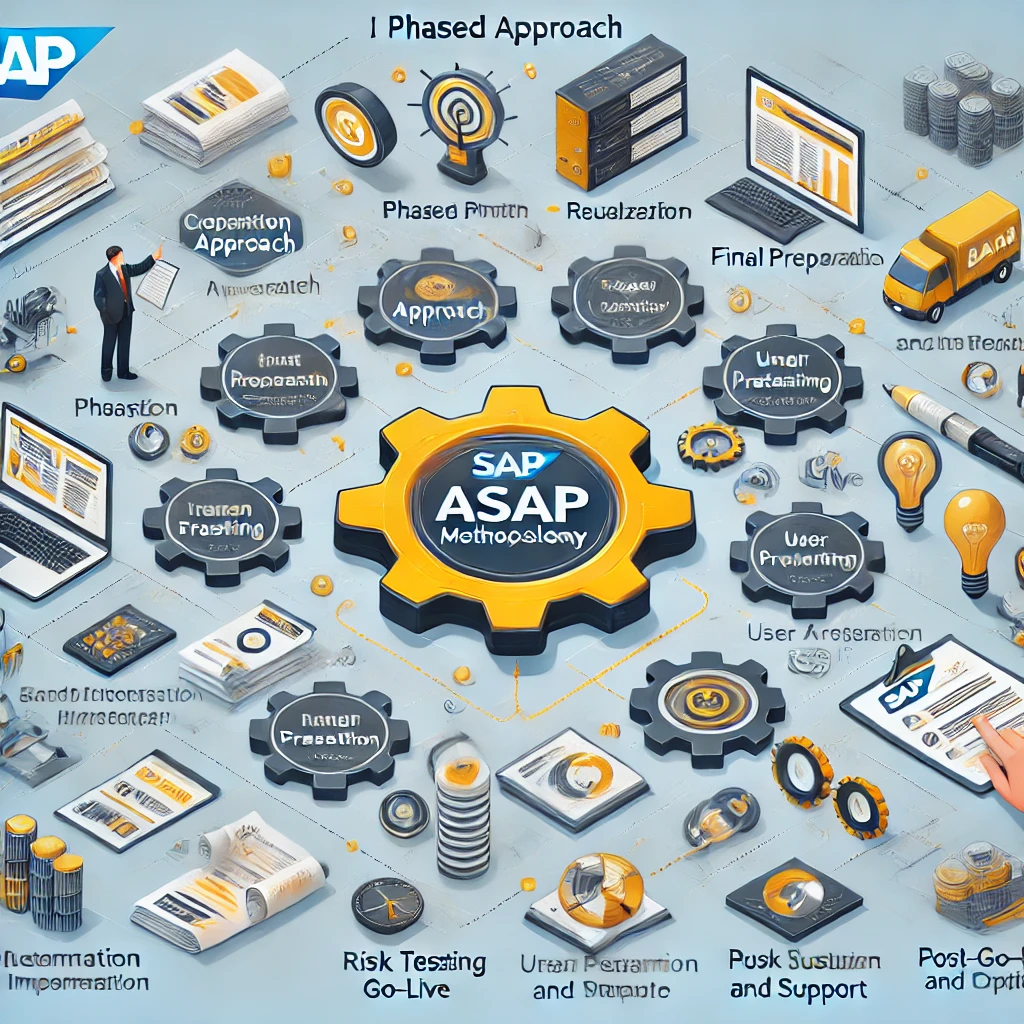
- Phased Approach: SAP ASAP provides a clear, phase-driven structure for SAP implementation, ensuring that each aspect of the project is thoroughly planned and executed.
- Documentation: Each phase of SAP ASAP emphasizes detailed documentation, which serves as a guide throughout the project and helps keep the team aligned with project goals and expectations.
- Customization and Configuration: SAP ASAP focuses on ensuring the system is customized to meet the business requirements, with a heavy emphasis on configuring the SAP software to match the company’s processes.
- Training and Knowledge Transfer: One of the core aspects of ASAP is the training of users and support teams to ensure that the company can operate the new SAP system effectively after go-live.
- Integration Testing and Quality Assurance: ASAP emphasizes rigorous testing throughout the implementation, including unit testing, integration testing, and user acceptance testing, to ensure the solution is functional and meets business need
Below is a detailed comparison between the two:
1. Overview & Purpose
- SAP Activate:
- A modern, Agile methodology introduced by SAP specifically for implementing SAP S/4HANA and other cloud solutions.
- Focuses on flexibility, speed, and leveraging pre-configured templates (SAP Best Practices) for faster implementations.
- Prioritizes iterative, Agile approaches that can adjust to changing business requirements.
- SAP ASAP (Accelerated SAP):
- A traditional, waterfall-based methodology developed in the 1990s for on-premise SAP implementations.
- Emphasizes a structured, sequential approach with detailed documentation and planning from the start to the go-live phase.
- Designed for step-by-step implementation, making it less adaptable to changes during the project.
2. Methodology Structure
Let’s compare SAP Activate and SAP ASAP methodologies in detail to highlight their differences:
1. Overview & Purpose
- SAP Activate:
- A modern, Agile methodology introduced by SAP specifically for implementing SAP S/4HANA and other cloud solutions.
- Focuses on flexibility, speed, and leveraging pre-configured templates (SAP Best Practices) for faster implementations.
- Prioritizes iterative, Agile approaches that can adjust to changing business requirements.
- SAP ASAP (Accelerated SAP):
- A traditional, waterfall-based methodology developed in the 1990s for on-premise SAP implementations.
- Emphasizes a structured, sequential approach with detailed documentation and planning from the start to the go-live phase.
- Designed for step-by-step implementation, making it less adaptable to changes during the project.
2. Methodology Structure & Phases
| Aspect | SAP Activate | SAP ASAP |
|---|---|---|
| Approach | Agile, iterative, and flexible | Waterfall, linear, and structured |
| Phases | Prepare, Explore, Realize, Deploy, Run | Project Preparation, Blueprinting, Realization, Final Prep, Go-Live & Support |
| Focus | Speed, innovation, continuous feedback | Detailed planning, documentation, strict sequence |
- SAP Activate Phases:
- Prepare: Project setup, planning, and team alignment.
- Explore: Workshops to gather business requirements and match them to pre-configured templates.
- Realize: System configuration, customization, and iterative testing.
- Deploy: Transition to go-live, including data migration and user training.
- Run: Continuous support and optimization post go-live.
- SAP ASAP Phases:
- Project Preparation: Initial project planning and setup.
- Blueprinting: Detailed documentation of business processes and requirements.
- Realization: Configuration and customization based on the blueprint.
- Final Preparation: Pre-go-live testing and validation.
3. Flexibility & Change Management
- SAP Activate:
- Highly flexible, allowing for continuous feedback and changes throughout the project.
- Uses Agile principles, which enable iterative adjustments to scope and requirements.
- Ideal for projects where business needs are expected to change or evolve rapidly.
- SAP ASAP:
- Less flexible due to its rigid, sequential structure.
- Once the Blueprint phase is complete, changes are difficult to incorporate without impacting timelines and budgets.
- Best suited for well-defined, stable projects where requirements are unlikely to change.
4. Implementation Approach
- SAP Activate:
- Agile and iterative: SAP Activate promotes working in short cycles (e.g., sprints), allowing teams to deliver incremental results. This approach makes it easier to adjust to changing business needs and innovate during the project.
- It integrates best practices and provides pre-configured templates, which speeds up the configuration and reduces the need for custom development.
- SAP ASAP:
- Waterfall approach: ASAP follows a step-by-step implementation where each phase is completed before moving to the next. It’s more focused on completing all deliverables in one phase before moving on, which can lead to longer cycles and limited flexibility.
- The process is highly detailed, and changes during the implementation are often challenging due to the extensive documentation and project planning involved.
5. Tools and Accelerators
- SAP Activate:
- SAP Activate comes with pre-configured content like SAP Best Practices, which include industry templates and ready-to-use configurations. These accelerators allow for quicker deployment and reduce the effort needed to build configurations from scratch.
- It integrates modern SAP tools such as SAP Solution Manager, SAP Fiori, and SAP Cloud Platform for real-time project management, monitoring, and collaboration.
- SAP ASAP:
- SAP ASAP provides tools like SAP Solution Manager for project management and tracking. However, ASAP’s tools are more traditional and focused on documentation and methodology enforcement.
- The focus on accelerators is less compared to SAP Activate, and the methodology often requires more manual configuration and customization.
6. Roles and Responsibilities
- SAP Activate:
- In SAP Activate, roles are more flexible and dynamic. Teams are often cross-functional, with collaboration between SAP consultants, business users, and IT teams throughout the process.
- The roles are focused on agile delivery, such as Scrum Masters, Product Owners, and other key roles that enable iterative development.
- SAP ASAP:
- SAP ASAP has more traditional roles aligned with structured project phases, including Project Manager, Business Analysts, SAP Consultants, and System Integrators. These roles follow a more fixed structure and focus on the completion of each phase in the implementation.
7. Collaboration and Stakeholder Involvement
- SAP Activate:
- In SAP Activate, collaboration is continuous throughout the project. Stakeholders are actively engaged during the Explore and Realize phases to ensure the solution meets their needs.
- SAP Activate encourages frequent feedback and adjustments as the project progresses.
- SAP ASAP:
- In SAP ASAP, collaboration is more focused on the early stages of the project, especially during the Blueprinting and Realization phases. Stakeholders are engaged for requirements gathering, but there is less ongoing collaboration once the system is being built.
- There is limited flexibility for incorporating changes after the Blueprint phase, as the project moves linearly through the stages.
8. Approach to Innovation
- SAP Activate:
- SAP Activate encourages innovation by leveraging Agile principles and cloud technologies. The use of SAP Fiori, SAP S/4HANA Cloud, and pre-configured solutions makes it easier to integrate new features and innovations throughout the implementation.
- SAP ASAP:
- Innovation is more restricted in SAP ASAP due to the waterfall approach and focus on completing predefined deliverables in sequence. The focus is more on getting the system up and running based on the original specifications, rather than adapting to new technologies during the project.
9. Comparison Summary
| Aspect | SAP Activate | SAP ASAP |
| Purpose | Fast and flexible implementation for SAP S/4HANA and cloud solutions | Structured methodology for SAP implementations |
| Methodology | Agile, iterative, and cloud-focused | Waterfall-like, sequential approach |
| Phases | Prepare, Explore, Realize, Deploy, Run | Project Preparation, Blueprinting, Realization, Final Preparation, Go-Live & Support |
| Flexibility | High flexibility and adaptability to change | Less flexible, more rigid and structured |
| Tools | SAP Best Practices, cloud tools, SAP Fiori | SAP Solution Manager, traditional tools |
| Collaboration | Continuous feedback and collaboration | Limited collaboration after blueprinting phase |
| Customization | Supports agile adjustments and cloud-based innovations | Customization is possible but less flexible |
| Approach to Change | Allows for ongoing changes and adaptations | More difficult to implement changes once blueprinting is complete |
| Best For | Cloud-based SAP solutions, Agile environments | Traditional on-premise SAP implementations |
Why Some SAP Solution Partners May Still Use ASAP (or a Hybrid of ASAP and Activate)?
In many cases, SAP solution partners may not fully understand or embrace SAP Activate yet because of familiarity with legacy systems, resistance to change, the complexity of cloud technologies, and the investment required in training and re-skilling. However, as more projects move toward SAP S/4HANA and cloud-based solutions, the shift toward SAP Activate is likely to accelerate, as it offers more flexibility, scalability, and alignment with modern business needs.
It’s important for SAP solution partners to recognize the value of SAP Activate in speeding up implementations and reducing risk, but also understand that transitioning fully may require a cultural and operational shift.
Comfort with Legacy Methodologies : The shift from the traditional ASAP methodology to SAP Activate is significant, and there are several factors that might explain why some SAP solution partners may not yet be fully adopting or understanding SAP Activate. Many SAP partners have extensive experience with ASAP, which has been around for many years. They are comfortable with its structure and detailed phases, such as Blueprinting, and might see it as a more predictable and risk-averse method, especially for clients with on-premise or legacy solutions.
Perceived Complexity of SAP Activate: The SAP Activate methodology integrates agile principles, cloud technologies, and a flexible approach, which may seem complex to some solution partners. The rapid pace of change in cloud technologies and the adoption of tools like SAP S/4HANA, SAP Fiori, and cloud environments can be intimidating, particularly for partners who are not yet fully embedded in the world of cloud solutions.
Training and Certification Delays: While SAP has put significant efforts into training and certifying consultants in SAP Activate, it takes time for partners to catch up. Some solution partners may still be relying on ASAP for their implementations simply because their consultants are more experienced or certified in ASAP, rather than in Activate.
Other reasons explained as follows:
Legacy Projects and On-Premise Solutions:
- SAP ASAP was designed for on-premise solutions, like SAP ECC (ERP Central Component), and it is still widely used for legacy projects. Companies working on such projects may prefer to stick with ASAP since they have been using it for years, and it works well for their environment.
- SAP solution partners that have specialized in on-premise SAP may have the expertise and tools based around ASAP and may not be as quick to switch to Activate, especially for clients who aren’t yet adopting S/4HANA or cloud solutions.
Business Blueprinting Tradition:
- Business Blueprinting (as part of ASAP) is a well-established and critical phase in many on-premise SAP implementations, particularly in industries where detailed planning and documentation are crucial. While SAP Activate also emphasizes requirement gathering and solution design, it is more flexible and iterative, which may conflict with some organizations’ preference for a more rigid approach. Some SAP solution partners may continue to rely on ASAP’s Blueprinting phase because it’s familiar and they feel it delivers a more structured way of gathering and validating business requirements.
Risk Aversion and Predictability:
- SAP Activate introduces agility and iterative feedback loops, which is ideal for cloud-based and digital transformation projects. However, companies in traditional industries or those managing highly regulated processes might still find the waterfall-like approach of ASAP more predictable and less risky, especially for large-scale deployments. For these companies, making the switch to a more flexible, agile approach can feel uncertain and risky.
Customization and Legacy Client Needs:
- SAP ASAP provides a well-documented, phase-driven structure that is attractive for clients who have custom SAP ECC implementations or heavily customized solutions. For these clients, the shift to Activate might seem overwhelming because they are more accustomed to SAP ASAP’s highly structured and detailed approach, especially for business blueprinting and solution configurations.
In Summary
The choice between SAP Activate and SAP ASAP depends on your organization’s specific needs, project goals, and the SAP solution you’re implementing. Both methodologies offer distinct advantages, so let’s break them down to help decide which might be better for your situation:
- SAP Activate is the preferred methodology for modern SAP projects, especially for cloud-based solutions like SAP S/4HANA Cloud, offering flexibility, speed, and continuous improvements.
- SAP ASAP remains effective for traditional on-premise implementations where a structured, well-documented approach is crucial.
- Choose SAP Activate if your project involves Agile practices, cloud solutions, or rapidly changing requirements.
- Choose SAP ASAP if you are working with a stable, on-premise SAP implementation that benefits from a detailed, sequential approach
While SAP Activate is now the preferred methodology for most modern SAP implementations—especially for cloud solutions—SAP ASAP is still used in some cases, particularly for on-premise, legacy projects, or where organizations prefer a more structured approach. However, SAP’s long-term strategy is to push for the widespread adoption of SAP Activate to ensure that businesses can adopt their solutions more quickly and efficiently.